Dental restorations in Budapest District IIITooth-preserving restoration
Inlay and Onlay Restorations in Óbuda
When a conventional filling may not be enough.
In cases of greater tooth substance loss, a custom-made dental restoration may be an option for restoring the tooth. At Hargitai Dental in Óbuda, Dr. Gábor Hargitai helps weigh up the options of a filling, an inlay and other tooth-preserving solutions based on a personal examination.
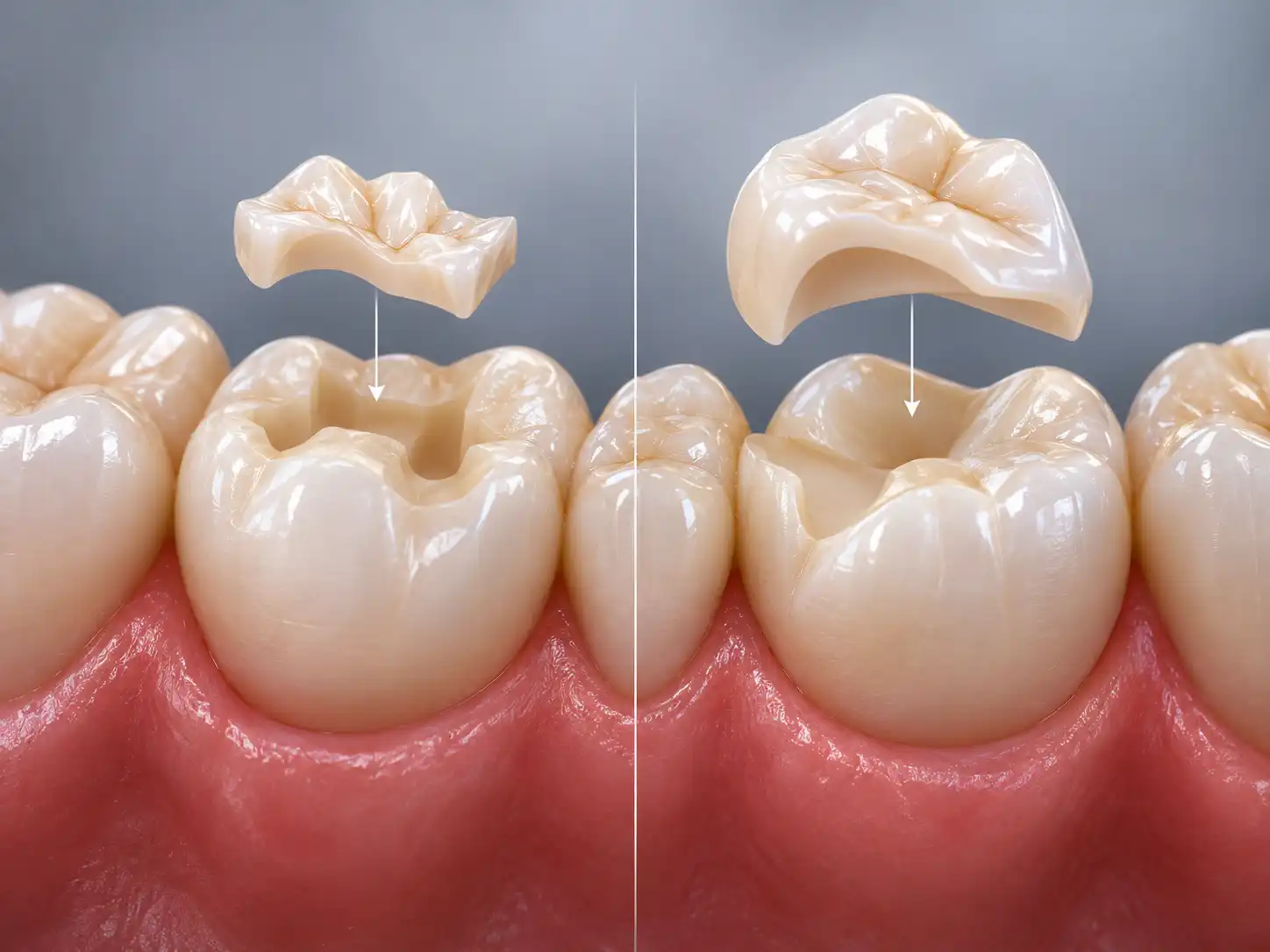
Ceramic and Gradia inlay options
INLAY OR ONLAY?
An inlay restores a cavity within the tooth, while an onlay may also cover one or more cusps. A clinical examination helps determine whether a filling, an inlay/onlay or a crown is appropriate.
GREATER TOOTH SUBSTANCE LOSS
When is a conventional filling no longer enough?
When decay or an old large filling has caused more tooth substance to be lost, a direct filling is not always the best restoration. A custom-made inlay or onlay may also be considered, provided the tooth's condition allows it.
- Larger but still restorable loss of tooth substance
- Worn or replacement-needed large filling
- Need to properly restore the chewing surface and the cusps of the tooth
The goal is to preserve the remaining natural tooth substance
Taking into account the condition of the tooth walls, the extent of decay and the bite relationship, the dentist weighs whether a filling, an inlay, an onlay or a crown may be recommended.
Book a tooth-preserving consultationPersonal dental examination in Óbuda
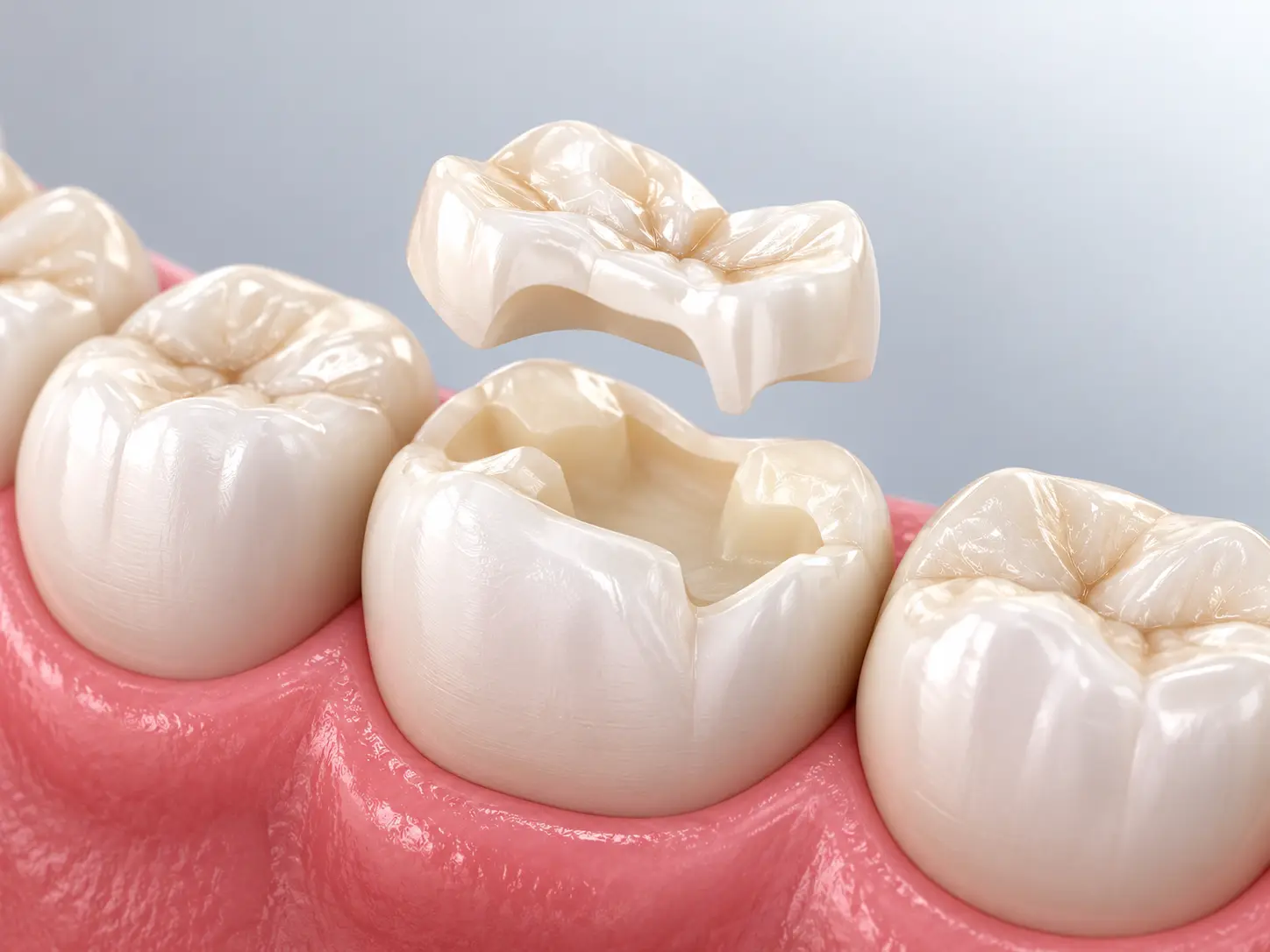
INDIVIDUAL TREATMENT PLAN
Tailored to the tooth's condition and chewing load
INLAY/ONLAY OR CROWN?
When might an inlay or onlay be suitable?
An inlay replaces the missing part within the tooth, while an onlay may also cover some cusps of the chewing surface. According to Hargitai Dental, in cases of greater tooth substance loss, a laboratory-made restoration can be one tooth-preserving option. The choice of material and type is based on an individual examination.
- Adequate condition and load-bearing capacity of the remaining tooth walls
- The size and location of the missing tooth substance
- Examination of the cusps, the chewing surface and the bite
- Ceramic or Gradia inlay among the options on the price list
- Cleanability and the possibility of long-term check-ups
A dental restoration is not ideal for every damaged tooth
If too little healthy tooth substance remains, or the tooth requires other treatment, the dentist may recommend a different restoration, such as a crown or, if necessary, a root canal treatment.
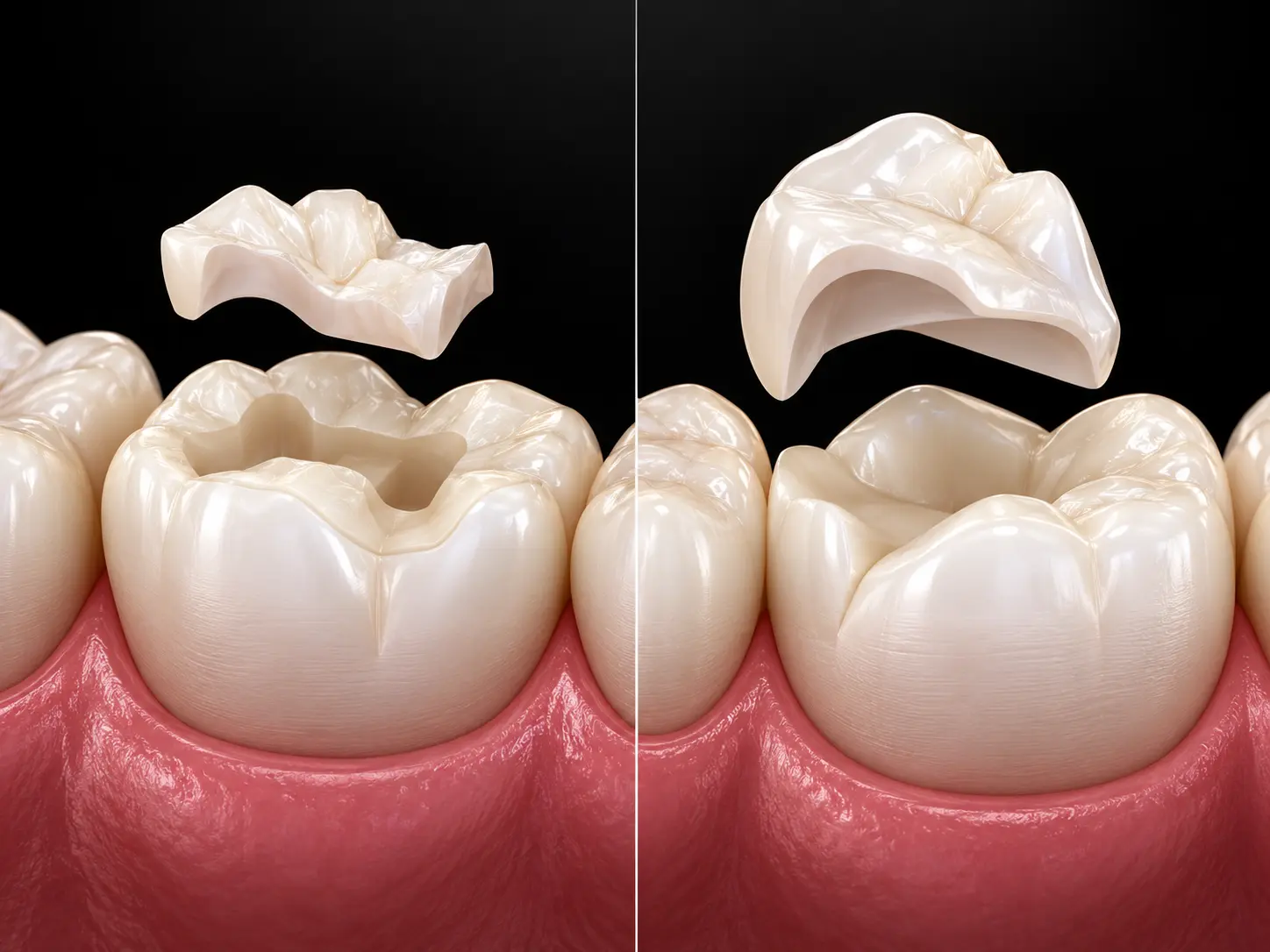
Inlay · onlay · cuspsHargitai Dental
HOW A DENTAL RESTORATION IS MADE
How is an inlay or onlay restoration made?
From the personal examination to the checked fit
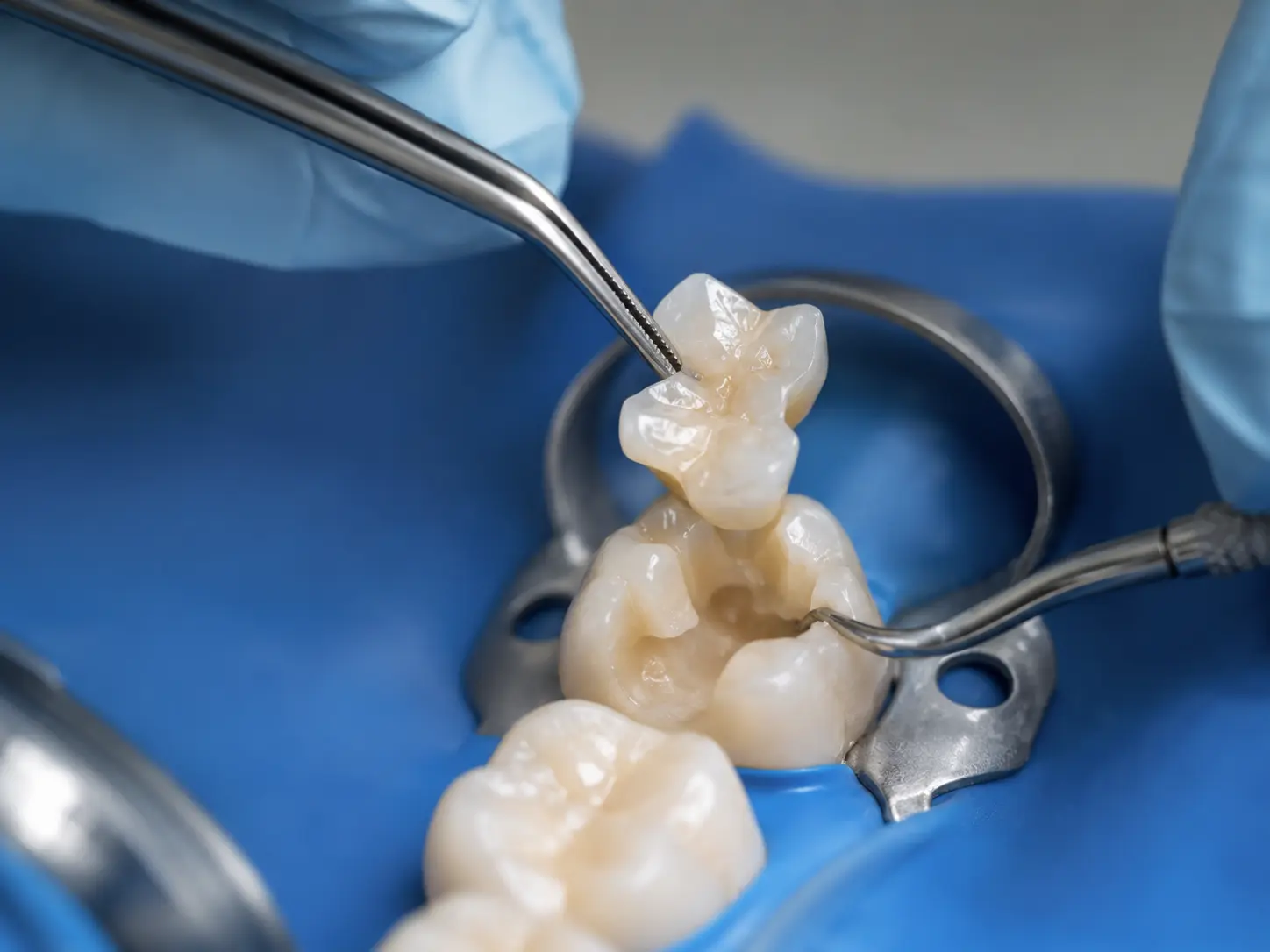
TOOTH-PRESERVING RESTORATION
Preparation · laboratory fabrication · placement
01
Examination and treatment plan
We examine the tooth damaged by decay or a previous filling, and weigh the suitability of a dental inlay or another restoration.
02
Preparing the tooth and impression
We prepare the affected tooth according to the treatment plan, then record the details of the tooth and bite needed for the laboratory work.
03
Fabricating the custom restoration
In the laboratory process, the restoration is made from the chosen material to fit the tooth. The exact procedure depends on the individual situation.
04
Try-in, placement and check
When placing the finished restoration, we check the fit and the bite, then discuss the details of cleaning and follow-up checks.
TOOTH PRESERVATION AND CHEWING FUNCTION
Preserving your own tooth also matters
Custom restoration tailored to the tooth's condition
A properly chosen dental restoration aims to restore the shape, chewing surface and usability of the affected tooth. The long-term outcome is also influenced by the tooth's initial condition, the bite load and oral hygiene.
Tooth-preserving approach
The options are weighed taking into account the still restorable natural tooth substance.
Restoring the chewing surface
The custom-made restoration is tailored to the shape of the tooth and the bite relationship.
Personalized material choice
The Hargitai Dental price list includes both ceramic and Gradia inlays; the choice depends on the examination.
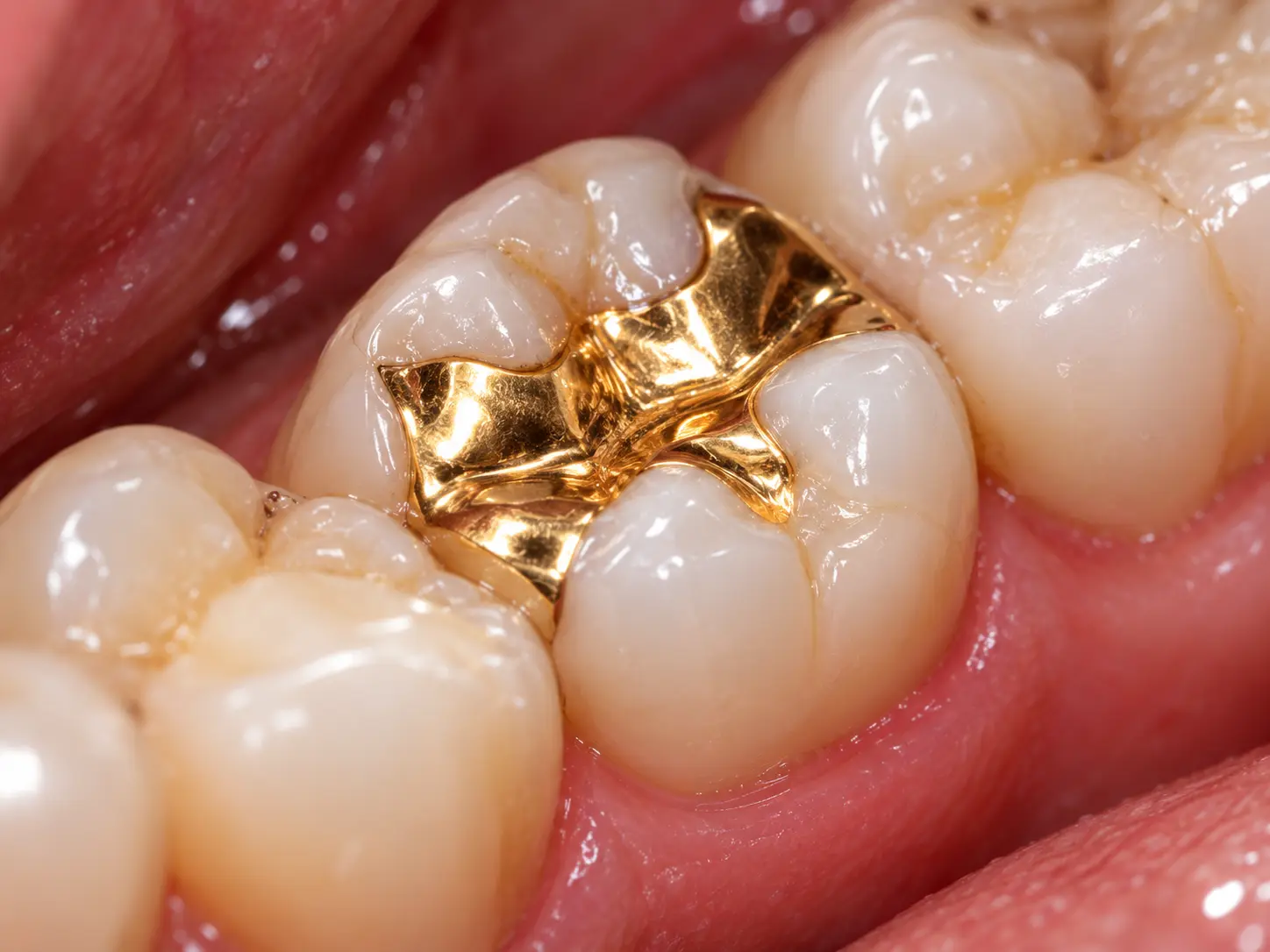
The aim of the restoration is for the affected tooth to function properly during everyday chewing, while preserving the natural tooth substance where possible.
HARGITAI DENTAL — TOOTH PRESERVATION IN ÓBUDA
Why enquire about dental restorations at Hargitai Dental?
Experience, material choice, personal assessment
In Óbuda since 1996
Hargitai Dental has welcomed patients in Budapest District III since 1996, offering tooth-preserving and prosthetic treatments.
Verifiable restoration types
The clinic's Hungarian price list includes both ceramic inlay and Gradia inlay.
Personal treatment plan
Dr. Gábor Hargitai weighs, based on the tooth's condition, whether a conventional filling, a dental restoration or another treatment may be appropriate.
TOOTH-PRESERVING CARE IN ÓBUDA
Inlay and onlay restorations at Hargitai Dental
Our clinic is located at 1036 Budapest, Evező utca 7. At a personal consultation we review whether a filling, a dental restoration or another treatment may be suitable for restoring a damaged tooth.
Frequently asked questions about inlay and onlay restorations
The most important things to know about dental restorations, the process and prices.
What is an inlay?
An inlay is a custom-made dental restoration that can replace the missing part of a cavity prepared within the tooth. It may be considered when, due to tooth substance loss, a conventional filling is no longer necessarily suitable.
What is the difference between an inlay and an onlay?
An inlay mainly restores a cavity within the tooth, while an onlay may also extend over some cusps of the chewing surface. The appropriate solution can be chosen based on a personal dental examination.
When is a dental restoration better than a conventional filling?
In cases of greater tooth substance loss or a significantly damaged chewing surface, a custom-made restoration may be considered. Whether a filling, an inlay, an onlay or a crown is appropriate also depends on the condition of the tooth walls and the load.
How and in how many visits is a dental restoration made?
Making a dental restoration generally requires an examination, preparing the tooth, an impression or another suitable record, laboratory work, then a try-in and placement. The number of visits is determined by the treatment plan.
How much does an inlay cost at Hargitai Dental?
On the Hargitai Dental Hungarian price list, the Gradia inlay is 65 000 Ft and the ceramic inlay is 75 000 Ft. The exact total cost is determined by the individual treatment plan and any additional care required. The price list does not list a separate price for the onlay.
Is anaesthesia needed for making an inlay or onlay?
The method of preparing the tooth and the need for anaesthesia are determined by the treating dentist based on the condition of the tooth and the planned procedure. You will be informed about the possible steps at the consultation.
Let's discuss how your damaged tooth could be restored!
Following a personal examination at Hargitai Dental in Óbuda, we discuss whether a filling, inlay, onlay or another restoration may be suitable.
Personalized care
Professional background